One niche first: notes from mentoring three Wrocław startups
Three hours, three early-stage teams, two questions: which customer do you start with, and how do you talk about value instead of features? Here's what came up most.
On Wednesday we finally met in person.
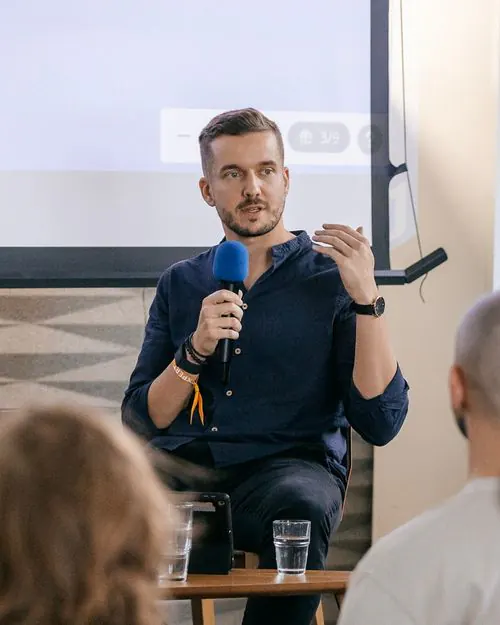
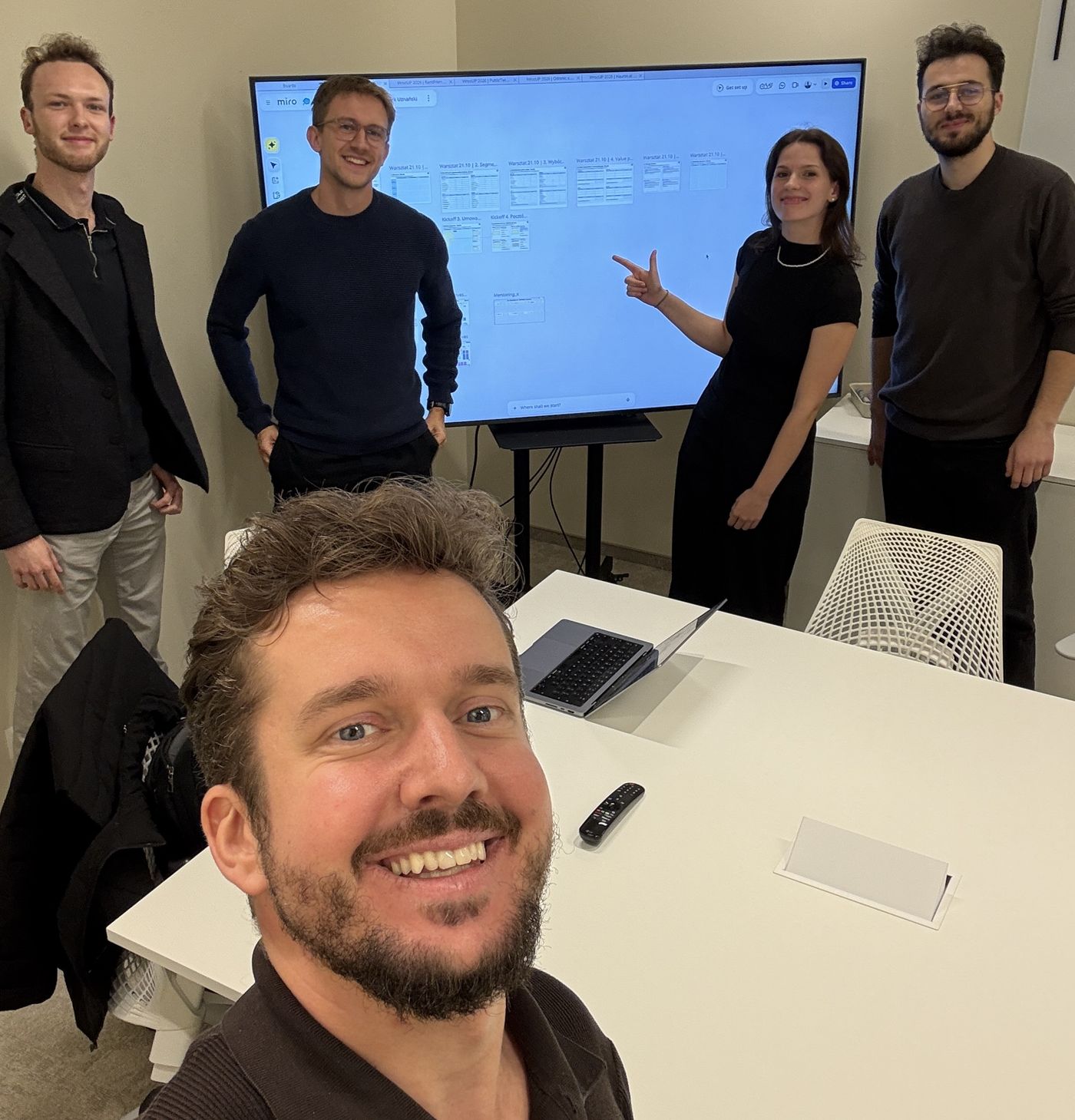
Three hours at LABO by L'UNI in Wrocław with the teams from RentFriends, PublicTwin and Odronic, as part of the Startup Wrocław mentoring program.
We talked about two things: which customer to start with, and how to talk about value rather than features. Four points came up more than anything else.
1. One niche, not the whole market
Selling to everyone is tempting for an early team. It feels safer. More potential customers, more ways to win.
It's the opposite. Airbnb, Facebook and Uber also started with a small segment, one where customers recommended the product to each other. You prove demand in that one niche first. Scale comes after.
A niche is not a smaller ambition. It's a test you can actually read. If ten people in one tight segment want what you built, you'll see it. If ten people spread across five segments each kind of like it, you won't see anything. I wrote about the same move from the other direction in iterate on who, not what.
2. Interviews are exploration, not validation
The second point was about customer conversations, and it's worth repeating.
An interview is not where you check whether people like your idea. It's where you find out what's going on in their world. One question does most of the work: "Tell me about the last time you..."
10 to 15 conversations like that are enough to start seeing patterns. Not because of a magic number, but because the same stories start coming back. I go deeper on the question itself, and on picking the right moment to ask it, in ask about the last time, not how they usually do it.
3. Customers buy value, not features
Third: fewer feature lists.
Founders know their product inside out, so they describe it the way they built it, one capability at a time. The customer doesn't care about the capability. The question they're silently asking is: what will actually change in my day?
If your pitch can't answer that in a sentence, the feature list won't save it. This is also why problem-solution fit comes before anything else: you can't describe the change in someone's day until you know what their day looks like.
4. Progress is customers, not activity
The last point is the uncomfortable one.
Trade fairs, startup competitions and new channels are great. But none of them replace conversations and tests with someone who will pay.
Activity is easy to count and feels like momentum. Customers are harder to count and are the only thing that is momentum. It's the same trap as a working product on day one: something visible to show, standing in for something real to learn.
What came out of it
What I liked most was that the session ended with something concrete.
One of the teams picked its first niche segment, instead of selling to everyone at once. That's a small decision on paper. In practice it changes who they interview next, what their pitch says, and what counts as a win in the next few weeks.
That's where the road to product-market fit starts. Not with a bigger market, but with a narrower one you can prove. (If PMF still feels like a vibe rather than a target, write it down as a hypothesis.)
Thanks to all three teams for the energy and for being completely open about where they are. We meet again on 24 November.
If you run an accelerator or a startup program and want sessions like this for your founders, that's what the 0 to 1 workshop for programs is built for.