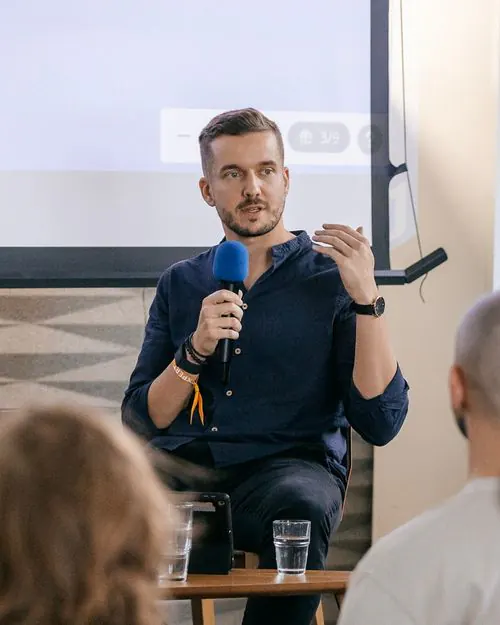
AI made me faster at deciding, not at building
Two stories from this year: one from leading product at UX Pilot, one from preparing workshops for founders. In both, the big change wasn't how fast I could make things. It was how fast I could get from evidence to a decision, and what I had to start checking.
Most of the AI conversation in product is about building.
A prototype in an afternoon, a working app over a weekend. I build that way too. But when I look back at this year, building faster is not what changed my work the most.
What changed is the time between "we have the evidence" and "we've decided." And with it, what my own job actually is.
Two stories. The first is from UX Pilot, where I led product until June. The second is from how I prepare workshops and coach startups now.
Story 1: three sources of evidence, one picture
At UX Pilot I ran discovery on three sources at once: PostHog analytics, in-app surveys and user interviews.
The interviews were the slow part. Not running them, using them. A 45-minute call is easy to have and hard to reuse: two weeks later nobody remembers who said what.
So I set up a simple routine. Every interview was recorded in Grain. After each call I exported the transcript and had AI analyze it. I kept one synthesis page per interview in Notion, next to my own notes. Then I rolled those pages up into one customer personas page: the product designer, the product manager and the agency lead.
When a product manager joined the team, I didn't send them to the recordings. I sent them to the personas page, because the synthesis was already there. The recordings were for going deeper on one person, or for learning how to run an interview.
The personas didn't stay a research document. In April they fed straight into the strategy I aligned the whole company around: who we build for, and just as important, who we don't. Bootstrapped founders were the clearest non-target. They used the product for one project and churned after one to three months. Saying "not them" out loud changed what we built next.
The number that couldn't explain itself
Here's where the two kinds of evidence met.
I ran a deep analysis of sharing and exporting. Paying users shared and exported their designs far more often than free users did. A clear pattern with clear numbers.
But the numbers couldn't tell me why the others didn't share. Maybe they never found the option. Maybe they came with a different goal. Maybe they just took a screenshot. Analytics shows what people do, not why they do it.
The interviews already held part of the answer. In several calls, users told me they'd love to make a prototype they could share with their team. We already had one. You had to select at least two screens, then find the option. Almost nobody did.
We had two ways to respond: add tutorials, or make the feature easy to find. I'll always pick the second. A complicated product with a lot of tutorials is still a complicated product. So we prioritized making prototyping discoverable. (The same pattern, a feature that existed but nobody reached, is behind both fixes in this masterclass case.)
None of that needed AI to be clever. It needed the interview evidence to be findable on the day the data question came up. That's what the routine gave us.
A week became a day, and my job moved
In a recent interview with My Company Polska, I put it in one sentence: instead of analyzing the data for a week, I could do it in a day. That meant we could test a hypothesis the next day, not the next sprint.
The time didn't disappear. It moved. Less of my week went into reading and sorting. More went into two things AI doesn't do for me.
The first is checking the synthesis against the raw quotes. A summary is confident by design, and it flattens people. Some of the users I interviewed weren't good examples of our persona at all, and their summaries read just as convincingly as everyone else's. If I hadn't known the person behind the summary, it would have gone into the persona as fact.
The second is deciding. AI gave me the patterns faster. Picking which pattern we bet the next month on was still my job.
Story 2: a workshop board in under ten minutes
The second change is in how I teach.
I teach business modeling and product development in the Executive MBA program at Warsaw University of Technology Business School and at StartSmart CEE, and I mentor early-stage teams. Preparing a session used to mean an evening of copying slides, rebuilding exercises and reading whatever the team had sent me.
On 9 November I ran a two-hour session with a cybersecurity startup founded by one of my former EMBA students. The team sent four PDFs (a market survey, a competitor analysis, a summary of feedback from their early testers and notes from a conference) plus their pitch deck.
I connected Claude Code to Miro and gave it three of my own course decks. A first draft of a tailored board was ready in under ten minutes: agenda, beachhead table, value exercise, three business model options built from the team's own evidence, and a plan for customer interviews before our second session.
It also did something I hadn't asked for. On the first frame it put a red panel with the gaps in their evidence: no beachhead market yet, testers who were security experts rather than buyers, and price points that the team itself had suggested during interviews. Those were the three things I most needed to know walking into the room.
The two questions I asked before the session
A draft that fast is only useful if you check it. So I asked two questions.
First: did you include the plan I'd sent the team? Partly. The session itself and the homework were there. The prep questions I'd asked them weren't, and neither was a deadline for their interview notes. Fixed in a minute.
Second, and more important: are these customer segments yours, or from their materials? The answer was honest. The segments came from their documents. Choosing four segments out of more than seven, and the three business model options, were the AI's own work. One sticky note asking whether the owner or the CFO pays was a pure hypothesis, because no CFO appears anywhere in their research.
That's the line I care about. The team's evidence goes on the board as evidence. Anything the AI inferred goes on as a question for the team. If I can't tell which is which, I can't run the session honestly.
Coaching between sessions
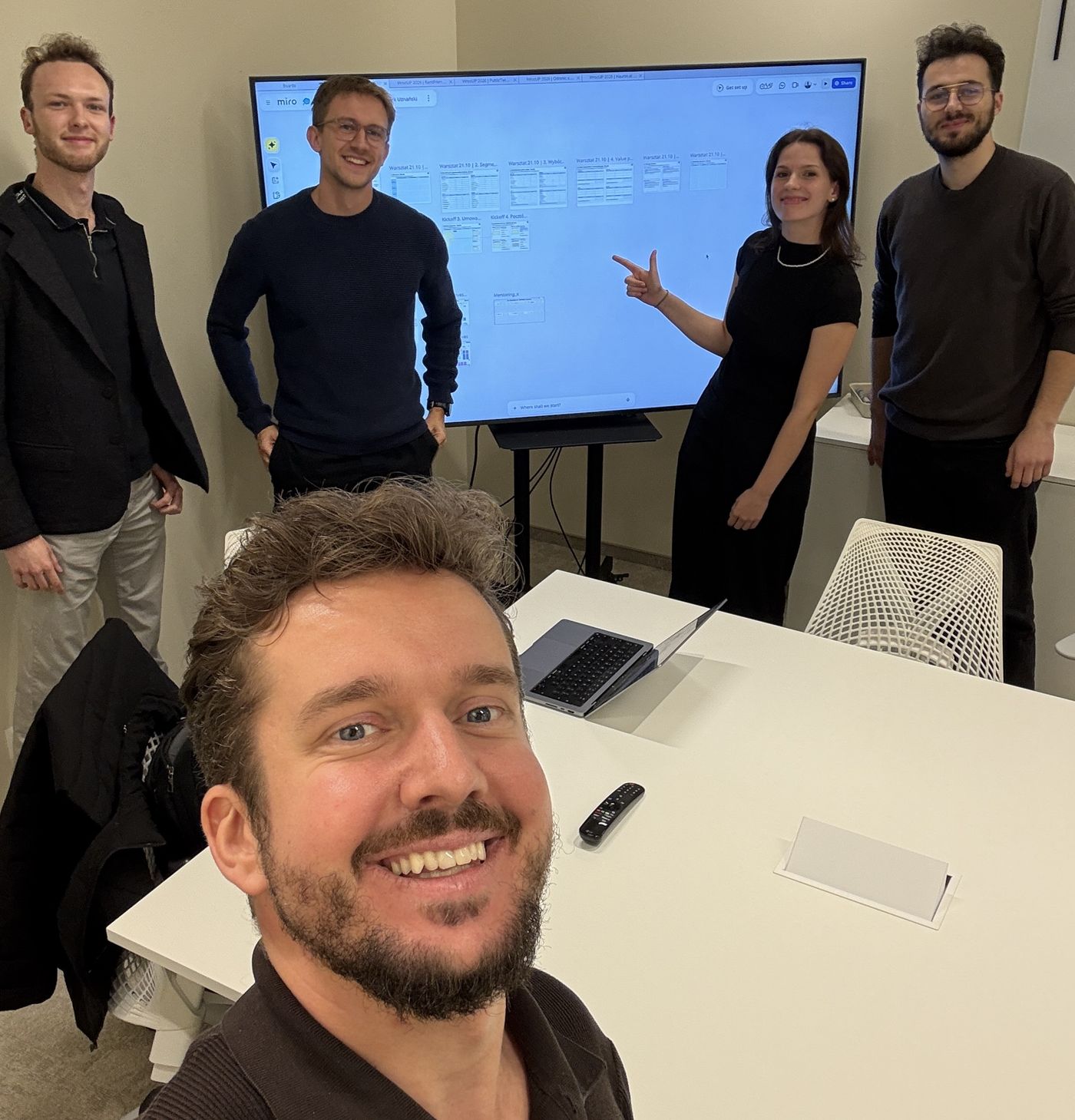
In the Startup Wrocław program, I mentor a group of early-stage B2B startups (I wrote up what came out of our second session). After the kickoff I gave Claude my voice notes and the kickoff board, and asked for one shared board per startup: where they are today, their goal and one metric for 31 December, their riskiest assumptions, and a log of our meetings.
Then I filled the mentor materials section for one team by hand, pasting in slides from my decks, and asked it to do the same for the others, matched to each team's problem. Beachhead and productizing a service for the two teams still selling custom work. Value proposition, and putting a number on it, for everyone. In total, 68 slides, each on the right board.
It also made a mistake. While updating the logistics section, it overwrote the text that held my calendar link, because it didn't read what was there first. I caught it the next day. Now the rule is simple: read the current board before every edit. The founders and I change those boards between sessions, and an assistant that edits from memory will quietly undo our work.
What didn't change
AI didn't run a single session, and it didn't talk to a single customer. The value of a workshop is still the conversation in the room.
It didn't decide what matters. It can find seven segments in a PDF. Choosing the one to start with is still a conversation with the people who will have to sell to it.
And it didn't make discovery optional. If anything, the opposite. When building is cheap, being wrong is the expensive part, which is the whole argument behind Discovery matters more when building is cheap. AI made the evidence easier to use. It didn't make it less necessary.
If you want to try this
What made the difference for me, in order:
- Record every customer conversation. You can't synthesize what you didn't keep.
- Keep one synthesis per conversation, in one place, and roll it up into personas or segments the whole team reads.
- Feed AI your own material: your decks, your frameworks, your team's research. Not a generic prompt.
- Ask "where did this come from?" before anything goes in front of a team.
- Let AI read before it writes, every time.
The prep got faster. The time I saved went back into the room, with founders and product teams. That's the trade I wanted. If you want your team to make the same trade, deciding faster and not just shipping faster, that's what the AI-First workshop and sprint is for.