

26% → 59%
Trial-to-paid conversion, in three months
Desertcart is a Dubai-based marketplace that ships hard-to-find products to the UAE and beyond. With a redesigned app, a new visual direction, and a paid “Pro” tier all on the line, they needed to know one thing before launch: would real shoppers actually get it? We ran the research to answer that - and handed back a prioritized roadmap, not just opinions.
Book a free intro call →
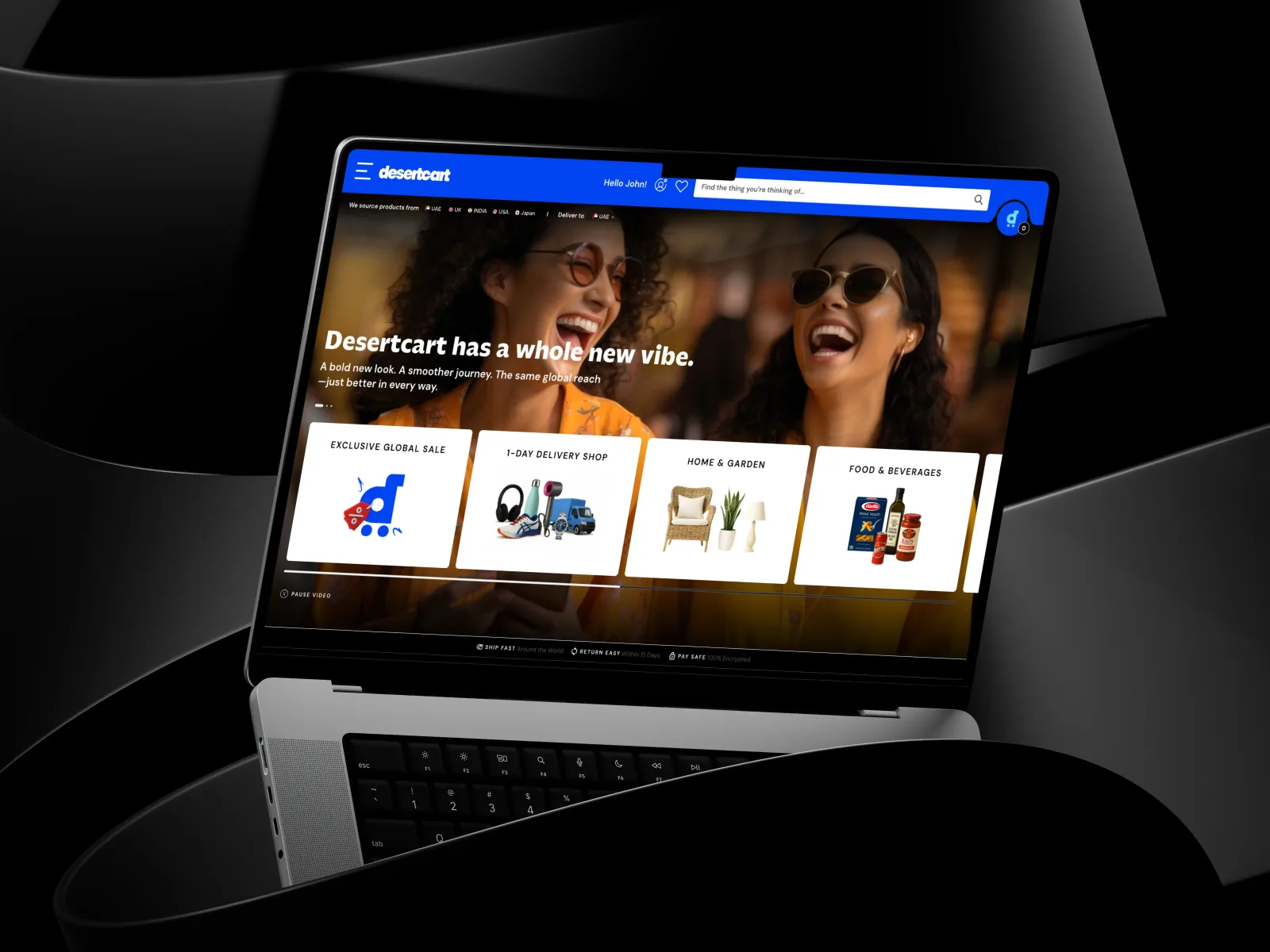
Desertcart lets shoppers in the UAE and beyond buy products that are otherwise hard to find in the region - a huge, global catalog delivered locally. To grow, the team had reimagined the mobile experience: a cleaner, more expressive design, new AI-powered features, and a paid “Pro” membership. It was a big bet - and betting on a redesign without testing it is how good ideas quietly lose money.
Desertcart didn't need opinions - they needed evidence. Before committing engineering to the relaunch, three things had to be de-risked:
Could real shoppers navigate the redesigned prototype, find what they wanted, and grasp the new features - without a guide?
Two brand directions were on the table - expressive vs. minimalistic. Which one actually helped people shop?
The new paid membership had to convert. What would make shoppers say yes - and what was quietly killing the upsell?
We ran eight moderated, remote think-aloud sessions - four with existing Desertcart shoppers and four with first-time visitors - watching real people use the prototype live, narrating every hesitation, misread, and “wait, where's the search?” moment. We recruited across four distinct shopping behaviors too, so the findings held across the customer base, not just one type of buyer.
Power buyer, mobile-first - shops often, moves fast, low patience for friction.
Snack hunter, desktop-first - browses for niche finds on a bigger screen.
Trust-focused health shopper - needs reassurance on authenticity and pricing.
Price-sensitive essentials buyer - weighs every fee before committing.
The redesign got a lot right. But the moments that break trust in a marketplace - a hidden search, a price that changes at checkout - were exactly the moments that tripped shoppers up.
Cleaner UI, clear hierarchy, and instant price + savings on every product tile.
Testers kept calling it “powerful and convenient” - a genuine differentiator worth leaning into.
Badges, perk lists, and free-shipping labels made the membership's value visible at a glance.
Seasonal touches like the Eid banner and regional models felt made-for-me.
A shopper's first instinct is to search - and they couldn't find the search.
Listing price ≠ cart price. Nothing erodes trust in a marketplace faster.
Splash screens got in the way - and desktop users were shown a mobile-only flow.
A cryptic “AI Find” label meant a great feature quietly went undiscovered.
The sharpest finding wasn't about a button - it was about who's tapping it. Existing shoppers had already banked their trust, so they optimized for speed. For first-timers, trust was the whole task. Same prototype, two very different jobs to do.
Our synthesis for the team: one core funnel, three tuning dials - show instant value to heavy buyers, surface legitimacy signals for first-timers, and localize fees and payment methods per market. (One caveat we flagged honestly: existing users skewed UAE and new users India, so tenure and market overlap - worth isolating in a follow-up round.)
“Visual style doesn't change what shoppers actually need - trust, speed, and clarity. New visitors leaned minimalistic; power users just wanted efficiency. The winning direction wasn't one or the other. It was expressive warmth on a minimalistic structure.”
We didn't hand over a wish list. We handed over a prioritized roadmap - what to fix now, next, and later - each tied to a real user and a real moment of friction.
The paid membership had real appeal - but doubt was quietly winning. Shoppers were pulled in by free shipping, a visible savings tracker, priority-delivery badges, and risk-free cancellation. They were held back by three things: “it's not worth it if I only shop now and then,” fuzzy benefit math, and a real fear of hidden auto-renewals. The play we recommended: surface the savings, prove the flexibility up front, and time the upsell to a moment that already stings - like a big shipping fee at checkout.
Prioritized fixes, sequenced Now / Next / Later - not a wish list.
Expressive warmth on a minimalistic structure - decision made, not debated.
Existing vs. new shoppers - each with its own onboarding and Pro strategy, not one-size-fits-all.
Desertcart went into its relaunch knowing what worked, what would quietly cost conversions, and exactly what to fix first - before a single engineering sprint was spent on the wrong thing. That's the whole point of testing before you ship: the cheapest bug to fix is the one you catch in a prototype.
It's easy to fall in love with a new design in Figma. It's expensive to find out - after launch - that shoppers can't find the search bar or don't trust the price. Four well-run sessions cost a fraction of a botched relaunch, and they turn “we think” into “we watched them.” If you're about to bet on a redesign, a rebrand, or a new paid tier, that's the cheapest insurance you can buy.
26% → 59%
Trial-to-paid conversion, in three months

+44.7%
Free-to-paid conversion from one experiment, tested on 120,000 users

80% → 60%
Onboarding drop-off at the pre-KYC screen

2 → 1
Onboarding experiences merged into one, at 1M+ users

0 → 1,000
Active B2C users in the first year
Book a free intro call and we'll figure out what's worth testing before you build it - no pitch deck, just your actual product.
Book a free intro call